
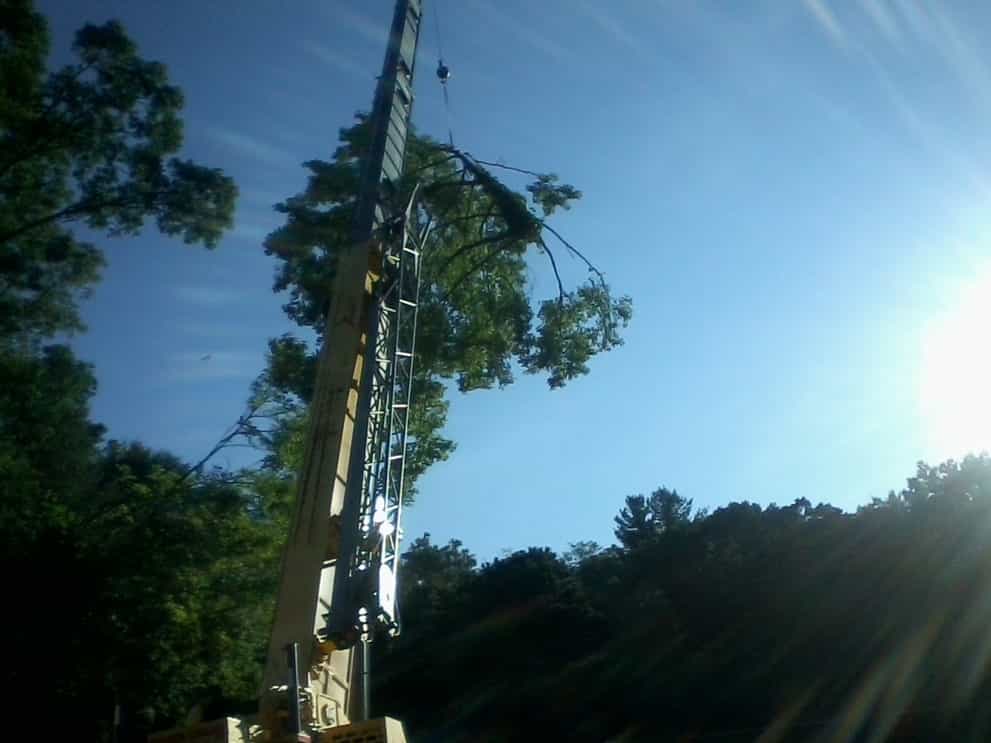
As magnificent as trees may be, they can sometimes be a hazard not only to property but also to the lives of the people living near them. There are many reasons why trees may become hazards, they may lose structural integrity, the roots may become weak, and they may become prone to being blown down by high winds. In cases such as these, the trees don’t exhibit any clear signs that they are under duress. They do give some signs which can only be picked up by people that have knowledge of these matters. That is why it is important to get the help of professionals so that they can tell you whether the tree is stable or not.
Removal of hazardous trees is also no easy task and should only be performed by people that have experience and knowledge of these matters. Our team in Waynesville, NC is more than adept at handling any form of hazardous tree removal because apart from the knowledge they also come prepared with the proper tools and safety equipment that is required to safely remove hazardous trees. Our team can make sure that you don’t have to suffer unnecessary costs because of a weak-rooted tree.
Frequently Asked Questions
What are the signs that a tree may be hazardous?
Possible warning signs include dead or broken branches, cracks in the trunk, exposed or weakened roots, unusual leaning, or decay near the base. Some structural problems are difficult to detect, so a professional evaluation can help determine whether a tree poses a risk.
When should a hazardous tree be removed?
A hazardous tree may need removal when it has lost structural integrity, developed weak roots, or become likely to fall during high winds. Prompt removal can help reduce the risk of injury or damage to nearby homes, vehicles, and other property.
Can I remove a hazardous tree myself?
Hazardous tree removal is dangerous and should be handled by experienced professionals with proper tools and safety equipment. Damaged or unstable trees can shift or fall unexpectedly during removal.
How is hazardous tree removal handled in Waynesville, NC?
The tree is first evaluated to identify structural weakness, nearby obstacles, and the safest removal approach. A professional tree removal team then uses appropriate equipment and controlled techniques to remove the hazardous tree while minimizing risks to people and property.
Should I have a tree inspected even if it looks healthy?
Yes, some hazardous trees show few obvious signs of weakness or distress. A knowledgeable tree professional can identify hidden concerns involving the trunk, branches, or root system that may not be visible to the property owner.